
When we started The Squad Diary, the plan was simple: write every day, stay honest, don't sound like a brand. Sixty posts later, that plan held in some places and fell apart in others. This is the part we don't usually see in "what we learned" posts — the part where the map and the territory didn't match.
The posts that performed worst were the ones we felt best about. Every time we wrote something balanced, well-rounded, covering all the angles, it moved almost nothing. The posts that landed were the ones we nearly didn't publish. The towel-size argument between six people sharing a cabana. The 3am Uber fight that ends every bachelorette weekend eventually. The father of the bride who'd spent four months practicing a toast and still wasn't ready when the day came. Those felt too small when we drafted them. Too niche. Too specific to one kind of situation. They were the ones people saved and forwarded.
The lesson took longer than it should have to absorb. Customers aren't looking for a roundup. They're looking for the sentence that sounds like something they thought but didn't say out loud. A post titled "best bachelorette gifts" disappears into the results. A post about why your maid of honor started planning seven months out and had nothing confirmed at week one sticks. Precision beats width. Every time.
We also learned that "useful" and "interesting" are not the same category, and most brands confuse them. We wrote useful posts. The keyword research was sound, the product links worked, the information was accurate. But the posts that spread were the ones where the point of view was clear before the end of the first paragraph. Where the reader knew immediately whether it was for them. That kind of specificity cuts the audience in the short run and grows it over time. The people who stay are the right ones.
Something we didn't anticipate: the product that drove the most blog engagement wasn't the one we'd built the most content around. The wedding handkerchief posts consistently outperformed the beach towel posts in time-on-page and in replies. Which tells us something about why people are reading. They're not shopping yet. They're solving a problem they can't fully name, which means the post that names it precisely is the one that earns the click later.
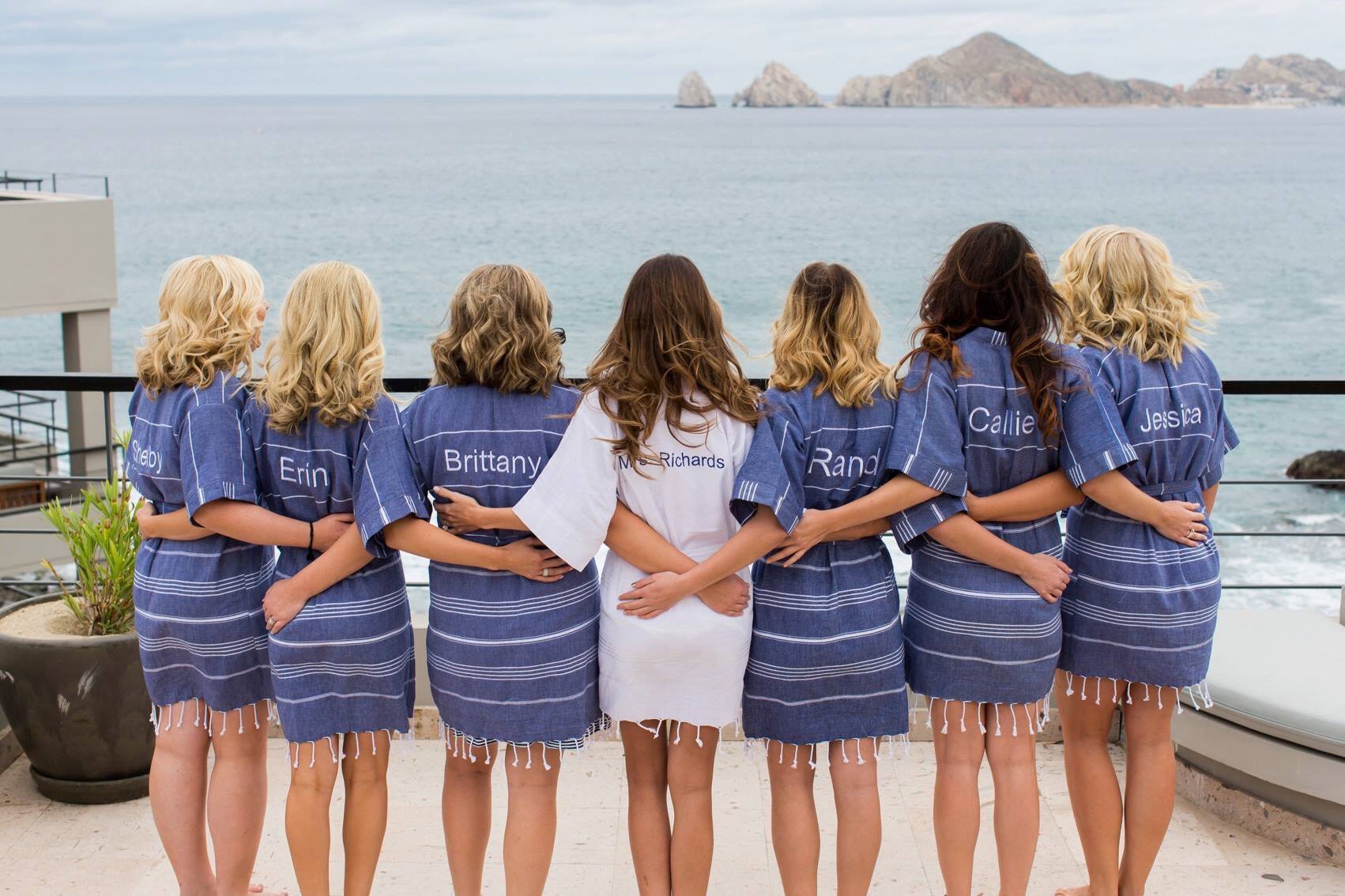
A customer from Charleston wrote us after the bachelorette weekend post. She said she read it aloud to her maid of honor and they laughed for ten minutes. She had ordered four personalized Turkish cotton beach towels for their trip the previous year and had been meaning to write a review ever since. "I just couldn't figure out what to say that wasn't boring," she wrote. That email was more useful than any analytics dashboard from the first sixty days.
What we'd do differently: less planning, more specificity from the start. The topic calendar helped as a map, but the writing improved most when we threw it out and chased something real — a customer question that didn't fit any existing category, a weird assumption repeating across Pinterest boards, a checkout conversation that deserved 600 words. The posts that matched a keyword with a genuine observation beat the ones that matched a keyword with a content format.
We're continuing. The atelier will keep producing things people can't quite describe to a friend before receiving them but won't let go of after. Use WELCOMETOTHESQUAD for 10% off your first order — no conditions, no timer, just a better entry point than whatever you were going to type into Google next.



Leave a comment
All comments are moderated before being published.
This site is protected by hCaptcha and the hCaptcha Privacy Policy and Terms of Service apply.